Scientific background
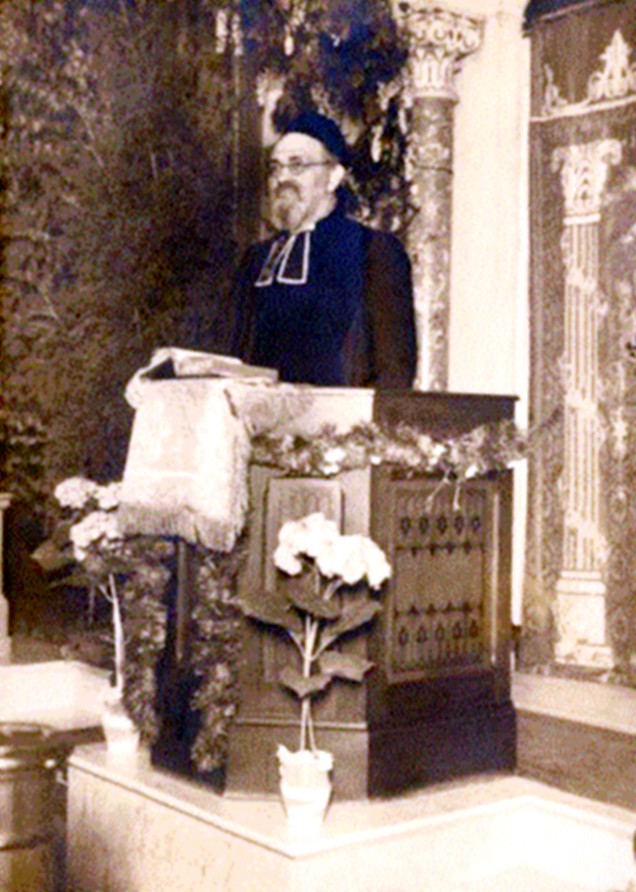
The German ‘Doktor-Rabbiner’ is one of the most famous inventions of modern Judaism in the 19th century. Answering the continuously raised expectations of German-Jewish communities as to the intellectual education and rational and academic abilities of their spiritual leaders, all three rabbinic seminaries in Germany placed their graduates under the obligation to achieve not only rabbinic ordination but also to gain a PhD from a German university. Consequently, almost all rabbinical candidates produced scientific dissertations on a variety of subjects: history, philosophy, sociology and even economics or statistics. All these ‘rabbinic’ dissertations are available today through different libraries but have very seldom been touched by the hands of scholars. They will offer a rich source of material from which the portrayal of a whole generation of German rabbis can be drawn.
While some rabbis stopped publishing academic texts after graduating from the German rabbinical seminaries and devoted themselves entirely to community work, it seems that most German rabbis continued to research and publish scientific, theological and also popular articles within the wide network of Jewish publication options during the first half of the 20th century, until the early 1940s. Certainly before and after World War I, but even after 1933, numerous works of Jewish thought were still being written by rabbis, and not only by professional, specialized academics. Especially during the early Nazi-era, when many academics had already left Germany, it was the rabbis who continued to publish books and articles.
Given this historical background, a broad overview of the literature written by German rabbis in the first half of the 20th century reads as the ‘theology of a whole generation’, as the last word German rabbis had to say about Judaism and the world before the total demise of German Jewry. Theology is understood here in a wider sense of the term: As a description of the religious world view of the German rabbi, as a theological understanding of society and the political forces moving within it. We decided to concentrate on works by rabbis who perished in the Holocaust. Those were the last rabbis to remain in Germany and they came from the broadest spectrum of the German rabbinate, representing all denominations (liberal and orthodox in all facets) of German Jewry. Thus, the choice of this group gives a double advantage: It is at the same time both arbitrary and representative; it seems to be statistically reasonable but is at the same time of the highest symbolic value. The last generation of rabbis before the genocide is therefore suitable, in our view, to stand for the entire rabbinic culture in 20th century Germany and its theological expressions.
While proposing to revive the thought and intellectual output of this generation, we will intentionally deviate from the usual research paths of portraying the life and work of single important thinkers in depth. The portrait of the German community rabbi in the first half of the 20th century is clearly a desideratum in modern scholarship, especially when it comes to his intellectual output. Concerning German rabbis murdered during the Holocaust, only a few prominent figures have been recognized by the academic world so far, at least to some extent. However, the majority of the perished rabbis are unknown, and their collective and individual impact on German Jewry remains undiscovered.
Despite numerous studies dealing with Germany in the eve of WWII, the spiritual and theological worldview of the Jewish Community at whole has not yet been studied. We aim to portray this unique community, an endemic eco-system of Jewish thriving life. Since the general German society grew more and more alienated of its Jewish neighbors, due to racist stereotypes and political obligations, and other, more conservative European Jewish communities found the German Jewish society rather liberal and assimilated, and thus unworthy of being part in a sincere and vigorous dialogue on questions of Jewish identity, creating a Jewish vision, and leading a Jewish life in the modern world.
The broad portrayal we intend to achieve will materialize by looking into authentic works, not necessarily written for public sermons or apologetic needs, but rather works that reveal the spiritual scopes and interests of their authors. By processing large amounts of data, not focusing on a specific region within Germany, or a religious sect, we will be granted a virtual hatch to real trends and intellectual issues that puzzled and interested the wide spiritual leadership of Jewish Germany.